Best B.Tech Branches in 2025: Career Scope, Salary and Future Demand
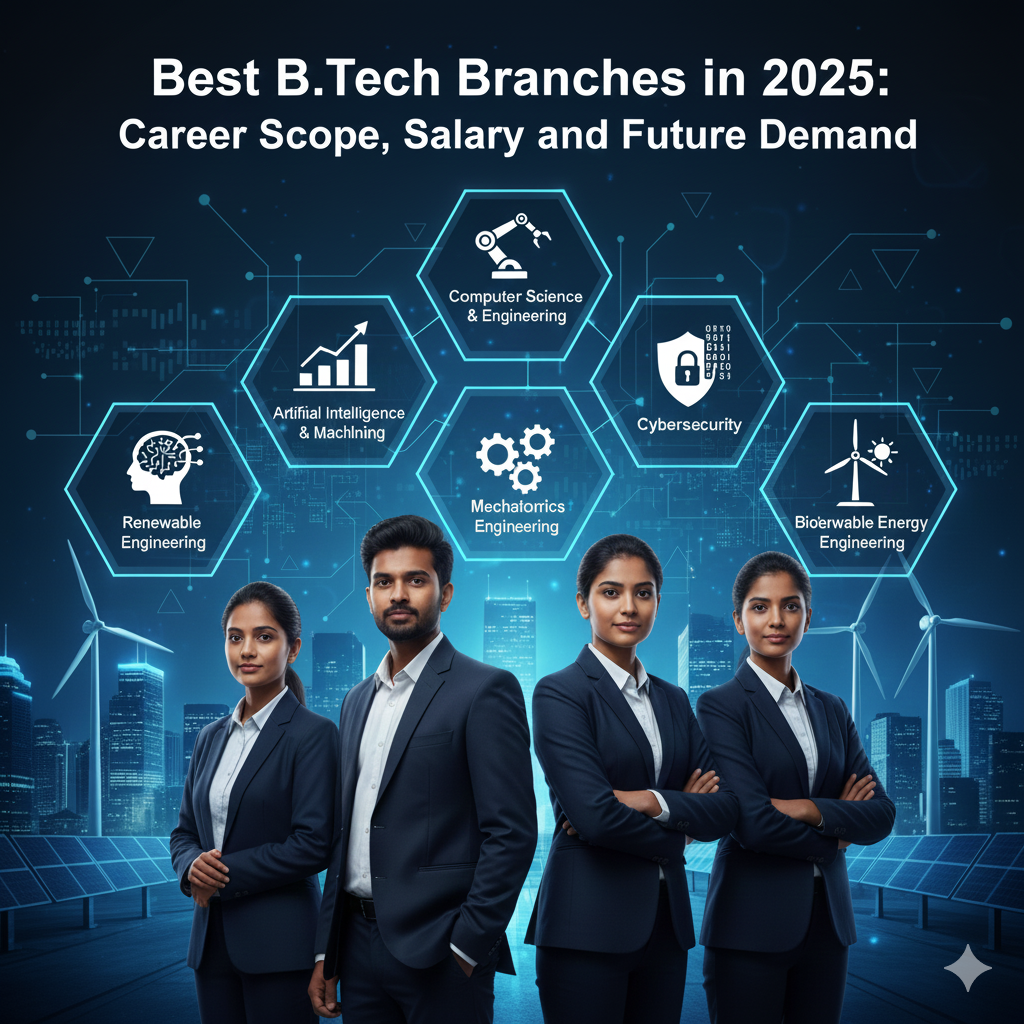
Choosing the right B.Tech branch in 2025 has become one of the most important decisions for students planning a stable and rewarding career. With rapid technological progress, automation, and a growing focus on sustainability, engineering roles are constantly evolving. Students today must look beyond traditional preferences and consider long-term career scope, earning potential, and industry relevance. The right specialization can open doors to global opportunities, continuous growth, and professional satisfaction. Understanding how different branches align with future industry needs is essential before making this critical choice. Computer Science & Engineering and Technology-Led Disciplines Computer Science and Engineering remains the most popular and in-demand B.Tech branch in 2025. As businesses across sectors continue to rely heavily on digital systems, software solutions, cloud platforms, and data-driven decision-making, the demand for skilled computer engineers continues to grow. Graduates from this branch find opportunities in software development, web and mobile applications, artificial intelligence, machine learning, data science, cybersecurity, and cloud computing. The versatility of computer science allows professionals to work across industries such as finance, healthcare, education, real estate, and e-commerce. Salary prospects in this field are among the highest in engineering. Fresh graduates can expect strong starting packages, while professionals with experience in AI, data analytics, or cybersecurity often see rapid income growth. Remote working options and international roles further enhance earning potential. From a future demand perspective, computer science is expected to remain highly relevant due to continuous innovation in automation, artificial intelligence, digital security, and software services. This makes Computer Science and its emerging specializations one of the safest and most future-ready B.Tech choices in 2025. Core Engineering Branches with Modern Industry Relevance Core engineering branches such as Mechanical Engineering, Electrical Engineering, and Electronics and Communication Engineering continue to offer solid career opportunities in 2025, especially as they adapt to new technologies. Mechanical Engineering has expanded into areas like robotics, automation, electric vehicles, aerospace, and advanced manufacturing. Electrical Engineering plays a crucial role in power generation, renewable energy, electric mobility, and smart infrastructure projects. Electronics and Communication Engineering supports fast-growing sectors such as embedded systems, semiconductors, telecommunications, and the Internet of Things. While starting salaries in core branches may be moderate compared to computer science, long-term growth is strong for professionals who specialize and upskill. Engineers working in areas like automation, renewable energy, electric vehicle technology, and industrial electronics often see significant career progression. The future demand for these branches remains stable due to ongoing infrastructure development, smart city initiatives, industrial growth, and the global shift toward clean energy. Students who combine core engineering knowledge with digital or analytical skills significantly improve their employability and career prospects. Emerging and High-Growth B.Tech Branches In 2025, several emerging B.Tech branches are gaining attention due to their alignment with innovation, sustainability, and research-driven industries. Artificial Intelligence and Data Science have become specialized fields focusing on intelligent systems, predictive analytics, and automation. These disciplines are widely applied in healthcare, finance, logistics, marketing, and governance, creating consistent demand for trained professionals. Biotechnology and Biomedical Engineering are also growing due to advancements in healthcare technology, pharmaceuticals, genetic research, and medical devices. Environmental Engineering and Sustainable Engineering have gained importance as industries and governments focus on climate change, resource efficiency, and sustainable development. These branches offer careers in green construction, waste management, renewable energy, and environmental consulting. Aerospace Engineering is another promising option, supported by growth in space research, defense technology, aviation, and satellite communication. Salaries in these emerging fields are competitive, particularly for professionals working in specialized roles, research institutions, or international projects. As global emphasis on innovation and sustainability increases, future demand for these branches is expected to grow steadily. Conclusion The best B.Tech branch in 2025 depends on a student’s interests, strengths, and long-term goals. Computer Science and technology-focused disciplines offer high earning potential and global exposure, making them ideal for students inclined toward digital innovation. Core engineering branches continue to provide stable and evolving career paths, especially when combined with modern technical skills. Emerging branches open opportunities in high-growth sectors driven by sustainability, healthcare, and advanced research. In a rapidly changing world, choosing the right B.Tech specialization can set the foundation for a successful, adaptable, and future-ready engineering career.